
Safe driving tips for teens, parents, and all drivers

Google
Web teendriving.com
teendriving home
Driving:
around school
around town
in the country
in bad weather
general tips
parallel parking
passing
avoiding distractions

crashes
fatigue
buying a used car
auto insurance tips
links
driving books, etc.
teendriving store
safety products
driver training
car products
parents center
discounts
tracking systems
tire safety
about us
contact us


21st Century Insurance

Royalty Free Images

Support This Site

Your Ad Here
 

Welcome to Teendriving.com, a site full of tips to help new drivers. Ryan started this driving website sixteen years ago because kids from his high school in Howard County, Maryland were involved in a lot of accidents--some of them fatal--and we wanted to do something to improve teen driving. As a community service, we've collected safe driving tips that new drivers might find helpful to prevent accidents and are sharing them here.. We've tried to verify each tip with at least two sources. But you should always check this and any other driving advice with your parents, driving school,or local traffic authority.

On teendriving.com you'll find hundreds of safe driving and defensive driving tips from buying a used car or a new car to driving in traffic, driving around school--even tips on parallel parking, and picking an online driving course including California Drivers Ed online and Florida Drivers Ed online. If you get a ticket, you can take your court order traffic class online  and then choose to compare car insurance quotes from different companies to find a lower rate. We've recently created a new Parent's center with tips on teaching your teen to drive, and driving contracts.  If you're considering buying a GPS monitoring system, read our tips.  In the car market? Consider new auto loans at Nationwide.  Join our newsletter list and receive the latest driving tips and news. Check out our list of great gifts for teens and drivers.     Send us your tips and comments.       Thanks for stopping by--Ryan and Eileen Buckholtz


drivered.com 10% discount

Teendrivingcourse.com is now offering a $5 discount to teendriving.com visitors when you register for a course with the link below.

Teendriving.com visitors get 10% discount for online courses and in car training at Drivers Ed Direct with link below.

driverseddirect

A great new DVD that provides driving lessons and sample test questions.

Driveredtogo

Teen Driving in the News:

05.10.12  Save a $1 with graduation gift discount on Driver's Ice Pac.  See note below and order via this link

03.23.12 New teen driving video from The USAA Educational Foundation--good tips on dealing with distractions and bad weather.  You can also order copies for your schools and teen organizations.

11.01.11  The recently launched AT&T DriveMode app is now available for Android™ customers (previously launched for BlackBerry®). This free mobile app is designed to curb texting behind the wheel as part of AT&T’s “Txtng & Drivng…It Can Wait” campaign.

10/31.11 Act Out Loud for 2012 has been announced.  Register now through Jan 13 2012 to win cas prizes for your school by doing traffic safety activies. More details.

Project Ignition Grants Now Available! The National Youth Leadership Council® and State Farm® are providing a number of $2,000 Project Ignition grants for public high schools to support their students in addressing teen driver safety through service-learning.  Read how to appy for a grant for your school.

2011  Attorney and author Richard P. Hastings has develped a very detailed contract for teen drivers and their parents.  He's offered to share the contract free to teendriving.com visitors.  Read more about it and download the contract.

- AT&T has a campaign called Texting can wait about the dangers of texting while driving. They have a new documentary called the Last Text which features stories from individuals,and parents, whose lives have been altered by teens texting while driving.  Take a look--it could save your life.  http://www.att.com/txtngcanwait    You can take their pledge on on their facebook page:

AAA offers driving simulators in some states to help teens learn to be safe drivers. See press release

ZoomSafer is offering free software for some mobile phones that activates automatically when it detects travel and auto responds to in coming calls and texts to say you are driving.   Click here for more information

April 30th is National No Phone Zone while driving.  We encourage all teens--and their families to sign the pledge.  Using your phone while driving--for calls or texting--greatly increases your chances of being in an accident.  See feature article below.

Find Gas Prices Near You


 Driver's Ice Pack

Driver's I.C.E. Pack

We've reviewed the new Driver's In Case of Emergency Pack and recommend that all teens have this in their car.  (Actually, it's great for any age drivers!)  The Pack gives critical instructions on how to handle emergencies as well as contact information. 


Special Offer!
The perfect gift for your graduate!
Through June 20, 2012, Teendriving.com is offering Driver’s I.C.E. Pack at the special price of $9.00/ea (regular teendriving.com price, $10.99); or for an even greater savings, $180 for a case pack of 24 (regular teendriving.com price, $199)! 
Stock up on your gifts before time runs out.  Use this link to get the discount.

We've recently had a chance to talk to the creator of the Driver's I.C.E Pack, Joyce Lopez.  Hope you enjoy her interview.  

Joyce Lopez

What is the Driver’s I. C. E. Pack—and why does every teen need one? 

In emergency situations, most drivers, no matter how young or old, have a tendency to freeze,  making it nearly impossible to focus, assess the situation, and begin gathering the information needed for emergency personnel and insurance companies.
Driver’s I.C.E. Pack is an easy-to-follow, glove compartment-sized handbook to help drivers STAY IN CONTROL during emergency situations.  The bullet point format and the color-coded index with matching tabs help drivers locate and gather the right information needed during an accident or traffic violation. 

 Why did you create the ICE Pack?

As the mother of two teen drivers and the daughter of a deaf senior driver, I felt compelled to create an easy-to-follow tool to help drivers stay calm and in control in the event of an emergency.

I began working on Driver’s I.C.E. Pack when my daughter began driving.  I wanted her to be equipped with the right information and forms to help walk her through the process of gathering and providing information in the event of an accident.  Driver’s I.C.E. Pack also includes helpful guidelines and tips in the event of a traffic violation stop.   I included a vinyl pouch for storing vehicle registration and proof of insurance, making it quick and easy to locate during an accident or traffic stop.

Driver’s I.C.E. Pack includes a section to document medical history, medications, and emergency contacts, providing medical personnel with vital information if needed. 

Here's one personal example of how the Pack came in very handy.

The band that my son and daughter are in was performing at a location two hours from our home.  Because the band was in need of an extra vehicle to help transport their equipment, my husband and I were accompanying them to their destination. About 5 minutes into the trip, the driver of one of the vehicles wanted to stop at a gas station/convenience store to purchase a quart of oil that he knew his car would require in order to complete its trek. After the oil was purchased, my husband and I, in the lead car, exited the parking lot and began heading toward the freeway entrance when my husband noticed that the second car in our small convoy was nowhere to be seen. We returned to the parking lot where we had left them only to find that their vehicle had collided with another car (or vice versa.)  When we arrived, both drivers were standing beside their slightly crumpled cars and simply staring at the damage as if they were both in a daze. 

Will, a relatively new driver at the age of 18, and the driver of the other car, an older, seasoned driver, both had expressions of disbelief on their faces.  Finally, Will turned around and said to my husband, “I don’t know what to do.”  Remembering that had a mockup of my Driver’s ICE Pack in our vehicle, I retrieved it and tore out two of the, “Driver Information” forms and handed one to each of the drivers. Immediately, they focused and began concentrating on the information they needed to collect as outlined on the form.  I handed one of the other band members in our group the checklist titled, “When an Accident Occurs” from the mockup sample and he immediately began to take photos of the vehicles, the surrounding area, and any skid marks or debris left over from the accident. 

By equipping drivers with an easy-to-follow tool, I was able to see firsthand how the Driver’s ICE Pack can help drivers focus and stay in control in the event of an accident.

What experts did you talk to/ work with in developing the ICE Pack?

I worked closely with veteran highway patrol officers in Alameda County and insurance executives to insure that the information in Driver’s I.C.E. Pack was accurate, to the point, and easy to follow. 

How can the ICE PACK be used when teaching your teen to drive?

Teens are taught how to drive, but they rarely receive instruction on what to do in the unfortunate event of an accident or traffic violation.  I believe that an important part of teaching your teen to drive is equipping them with the right tools to help them stay focused and in control when it is needed most.  Driver’s ICE Pack keeps important information, forms, and checklists at their fingertips. Read more of Joyce's interview

Teaching your Teens to Drive--a free booklet from MetLife

  Connect with kidsConnect with Kids, a website and community for parents, has release some great free video segments for teen drivers and their parents..  Check out Girls and Car Crashes , Text Messaging and Driving--a Bad Combination and Teens and Road Rage .

AAA released a study that teens are just as likely to have accidents in the after school times 3:00pm - 5:00pm Monday through Friday as their are on weekend evenings.  AAA suggests that parents monitor teen driving during these critical hours.  We have a lot of tips on this site--including our teen-parent contract to help teens be safer drivers.. 

A Johns Hopkins Study has found that the states with the toughest graduated licensing requirements have a 20% reduction in teen fatalities for 16 year old drivers. And states that have graduated licensing have an average of 11% less fatalities for 16 year old teens.  Recommendations include 30 hours of supervised driving, night time restrictions, and restrictions on passengers in the car.  Read the press release. 

According to a Virginia Tech and National Highway Transportation Safety Administration study, distracted drivers accounted for 80% of the crashes in their study and 18-20 year olds were 4 times more likely to be involved in accidents.   Also, check our tips for avoiding distractions while driving.


Tips of the Month:.  Here are some tips to drive safe in severe weather. While it's been a milder winter in some places, we're seeing an unusual number of winter tornados--especially in the south.

1. Follow the weather reports and if possible, don't go out driving if there's a snow storm, freezing rain, sleet, tornado, hurricane, flodding or severe thunderstorm warning in effect. You can check www.weather.com for the latest reports and download a weather app for your phone such as the Weather Channel App for the Iphone and Ipad.  Also, listen to your local tv and radio stations.   Sign up for alerts on your phone from the weather websites or your local TV website--it will alert you if tornado or severe storms are in your area.

2. If you're driving and see a tornado, don't try to outrun it because it might be going faster than you can drive and tornados can pick up cars and toss them like toys. Safety experts recommend finding a low lying area like a ditch, getting out of the car, and lying face down to avoid flying items.

3. Hailstorms can do a lot of damage to your car and can even smash the windshield. If you're out driving and a hail storm comes up suddenly, look for a sheltered spot under a bridge or overpass to stay under until the storm has passed.

4. Watch out for downed power lines and tree limbs that might be in the road.

5. Don't go through flooded roads because you may not be able to get through and could get stuck--and it only takes a few inches of swift moving water to sweep your car away.  If you can't see the bottom of the road through the water--don't drive in it.  And if you see if up to your door--back up and go another way.

6.  Drive slowly and put your headlights on.  Turning your headlights on in rainy weather is required in many states--including Maryland.

7. If there's snow in your area, check your tail pipes before you get in the car to make sure they are clear of snow.

See our other tips for driving in bad weather.

No Phone or Texting Zone while Driving

For 2011 give yourself a gift with a future:  Resolve not to Text Message or use your cell phone while driving.  Sign Oprah's No Phone Zone Pledge and AT&T's It Can Wait pledge  Check out the Governments distracted driving website http://www.distraction.gov/

I’m not really a talk-on-the-phone kind of guy, but I do love to text message.  But even I was pretty amazed at what I saw while riding to the Lakers game last month at Staples Center.  I counted at least 3 separate cars with a driver texting in them.  Traffic was bad on the 101 and we were moving pretty slow -- 10 to 15 mph.  So what’s the harm in checking your e-mail or sending a quick message from your phone?  I think the better question is, is it worth risking your life to read and reply to a message?

What is alarming is that in a recent online poll of 16-19-year olds, over 50% responded that they send text messages while driving.  The numbers already show that talking on a handheld cell phone will increase your chances of getting into an accident by a factor of 3, and that’s with keeping your eyes mostly on the road!  The danger in texting is that your eyes move back and forth from the road to your phone, typically located on a person’s lap or steering wheel.  Those few precious seconds back and forth can be the difference between avoiding an accident or rear-ending the car in front of you and causing a chain reaction.

Currently 30 states, D.C.  and Guam ban text messaging for all drivers and 8 states prohibit all divers from using handheld phones while driving.  To see what the laws are in your state, check out the GHSA website.  Also check out the distraction.gov site for details about each state's laws. Many other states are working on legislation for both hand held cell phones and texting while driving.  Do yourself a favor and go ahead and cut out the texting while driving now.  And wait until you can pull off the road to a safe place to use your phone--or call someone back.  Sure, your friend may have to wait a few extra minutes to get a response back.  But you, your passengers, and other drivers on the road, will be safer.  

Drive safely,

Ryan

Connect with Kids has a good video on texting and driving.  Check it out.  http://www.connectwithkids.com/tipsheet/2006/293_aug9/thisweek/060809_text.shtml


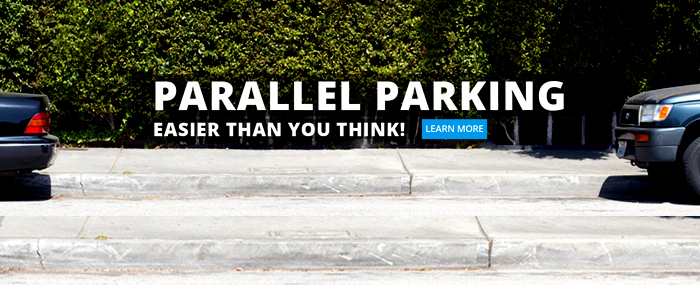
Parallel parking is one of the most searched on terms on our site.  Ryan has collected some new tips for those trying to learn how to parallel park.

Be careful when backing up to make sure cars are not trying to pass you (also take caution when passing cars that are parallel parking)

Practice with cones or large boxes

When parallel parking on the left side of a one way street (or behind a car doing the same), take extra care, as most people are unfamiliar with this process

If you are uncomfortable with your angle of approach, pull back out and start over; do not force it.

When parking, try and leave the car in front of you space to get out of the spot.

If riding with a passenger, it's not a bad idea to have them direct you as it is often difficult to tell how much room you have behind you to another car.

When parallel parking upwards on a hill, turn your front wheels to the left and apply the emergency brake.

When parallel parking downwards on a hill, turn your front wheels to the right and apply the emergency brake.

Sometimes it easier to look for a spot you can pull straight into then try and get your car into a small parallel spot.

Your foot should always be on or right near the brake pedal, the gas is not needed.

If you are behind a car that is signaling to parallel park, either pass right away or give them plenty of room to operate.

See more parallel parking tips


Interview Archives

Interview with Dave Melton from Liberty Mutual on teen driving and safe used cars.

connectwithkids     Interview with Connect with Kids

Crashproof Your Kids interview

Interview with Stephanie Esterline, the author This Girls First Car

Ryan attended the Highway Survival Course at the Jim Russell Racing School in Sonoma, CA.  The school is located at Infineon Raceway, about a 45 minute drive north from San Francisco (Infineon is the host track for the NASCAR Dodge/Save Mart 350).  The half-day (4 hour) course covers skills such as skid control, emergency braking, and accident avoidance.


racer

Interview with Race Car Driver Arie Luyendyk Jr
Read the interview and Arie's driving tips       


Subscribe to teendriving's newsletter and receive driving tips and news.

Subscribe now


Take your Driver's Ed course online at Driversed.com

10% off Drivered.com for teendriving.com visitors by using link above..


Copyright 2012 Teendriving.com

Disclaimer * Privacy Policy * Reprint Policy